REC @ Automation World 2025
August 10, 2025
Vietnamese-German University (VGU) is well-known for its strong engineering and automation programs. REC represents a dynamic community of students who bring these academic foundations into practice through hands-on projects, competitions, and real-world applications.
This year, our teams are proud to showcase two innovative projects that combine creativity, technology, and real-world applications. Scroll down to meet our main characters today!
Drone
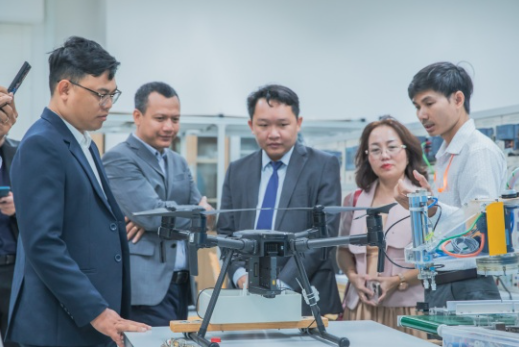
Drones have a wide range of applications across various industries, including photography, emergency management, public safety, and high-tech agriculture. They are used for aerial surveys, infrastructure inspections, and even for delivering goods. Drone mapping can refer to the reproduction of 3D models using overlapping images stitching techniques, the creation of crop distribution maps using data from NDVI sensor, or the generation of thermal maps using an infrared camera.
Payload: Approx 2.34kg (with two standard batteries);
Max Flight Time (Full Payload) 13min;
Downward Gimbal Mount;
Max Transmitting Distance(unobstructed, free of interference);
AUTONOMOUS ROBOT BASEAUTONOMOUS ROBOT BASE
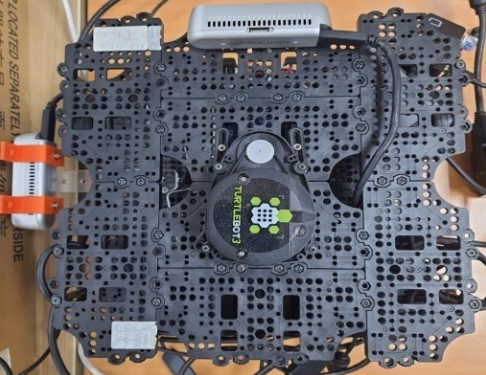
The Autonomous robot platform is a ROS-based, affordable, and programmable mobile robot for use in education, research, hobby projects, and product prototyping. Provides a highly flexible, low-cost, scalable robot development platform to accommodate many complex robotic applications. Support research on SLAM (Simultaneous Localization and Mapping), Navigation, and build maps of the surrounding environment
FACE RECOGNITION
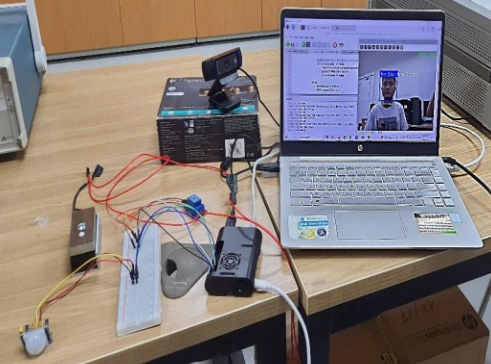
Face recognition has been a hot study topic in the realm of computer vision applications due to its user-friendliness, non-contact nature, and intelligence. This facial recognition-based access control system is built based on a Raspberry Pi.
The major goal is to provide a low-cost, contactless, and automated solution for securing access to restricted places such as laboratories, offices, or smart environments.
The system captures facial images using a USB camera, processes them locally on the Raspberry Pi, and verifies a person’s identity by comparing the live image to stored facial encodings generated using a deep learning model.
DIGITAL TWIN
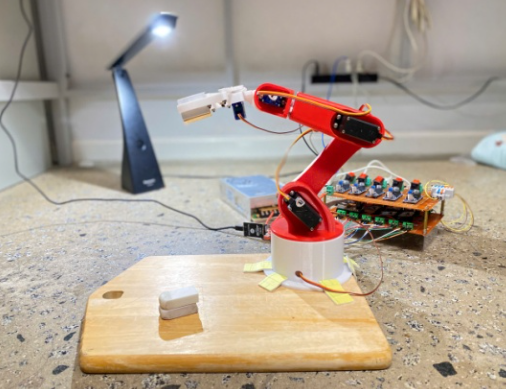
A Digital Twin is a virtual representation of a physical system, product, or process that continuously receives real-time data from its physical counterpart. This technology enables simulation, monitoring, and optimization throughout the system’s lifecycle.
The primary objective is to simulate, test, and optimize automated production systems prior to their physical implementation. This approach reduces errors, minimizes downtime, and enhances overall system efficiency